
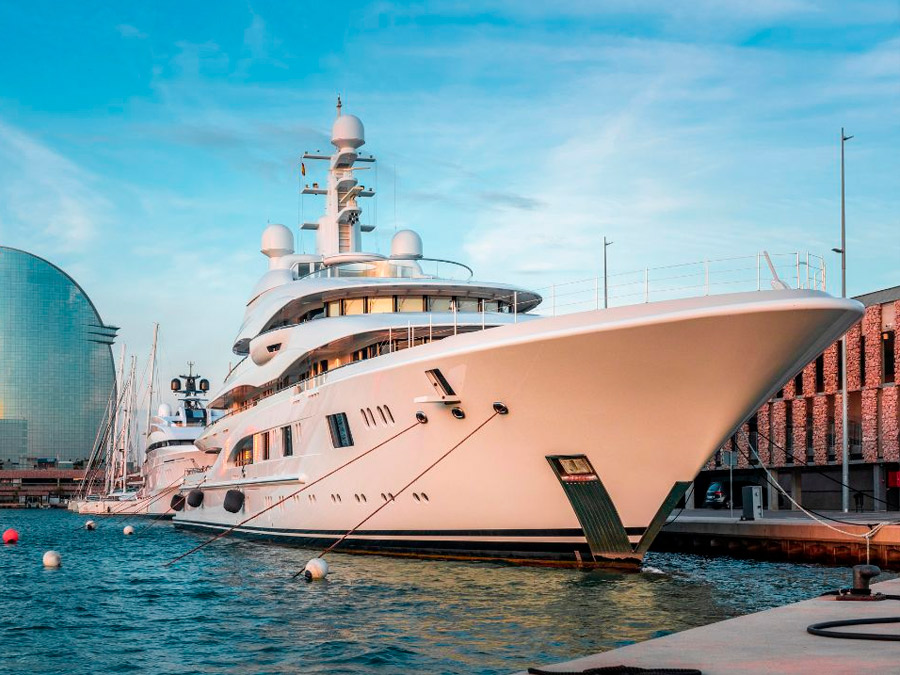
If you are a boat or yacht owner, you have surely experienced the process of mooring your vessel. Mooring a boat is a crucial task that can result in success or failure. If done properly, the boat will be protected and secure. However, if not done correctly, there can be damage to the vessel and the port structure. In this article, we will provide you with a comprehensive guide on how to moor a boat and give you some useful tips to make the entire process as easy and safe as possible.
Before you begin, it is important to know some essential nautical terms:
- Berth: the place where you moor your boat or yacht.
- Mooring: the action of securing your vessel to the dock.
- Fender: a protective object placed between the boat and the dock to prevent damage to the vessel.
- Rope: a synthetic or natural fiber rope used to moor a boat.
- Bitts: devices fixed to the dock used to secure the boat’s ropes.
Now that you have an idea of the essential terms, let’s begin with the steps for mooring a boat.
Step 1: Preparation
Before approaching the dock, it is important to ensure you have all the necessary safety equipment on board. Make sure your fenders and ropes are at hand and that the boat is at the correct angle for mooring. It is also essential to consider weather conditions, such as wind direction and speed, and water current.
Step 2: Approaching the dock
Once you approach the dock, ensure that the fenders are at the most critical points of the vessel. Make sure you have enough space to maneuver the boat and approach the dock slowly. It is important to approach at the correct angle to avoid hitting the boat against the dock.
Step 3: Mooring the boat
Once the boat is in the correct position, it’s time to secure it. The first thing you should do is prepare the ropes. Make sure the ropes are of adequate length and are well secured to the boat. Then, throw the ropes to the dock and secure them to the dock’s bitts. You must ensure that the ropes are tight and firmly attached to the dock.
If the wind is strong, you may need to use fenders as shock absorbers to prevent the boat from moving too much. If your boat is large, it is advisable to use two or more fenders at each critical point.
Step 4: Checking the mooring
Once you have secured the boat, it is important to check that everything is well fastened and that there is no slack in the ropes. You must ensure that the boat is a safe distance from the dock and that the fenders are in the correct position. You should also check that the boat is level and not leaning to one side. If necessary, adjust the ropes and fenders to ensure everything is properly secured.
Step 5: Unmooring the boat
When it’s time to unmoor the boat, you must ensure everything is ready before you begin. First, you must remove the fenders and ensure the ropes are free of obstacles. Then, release the ropes from the dock’s bitts and pull them off the dock. Once the ropes are free, slowly move the boat away from the dock. Be sure to do so slowly and carefully to avoid any damage to the boat or the dock.
Useful tips for mooring a boat
- Pay attention to the weather: Before mooring your boat, you should check the weather conditions to avoid any problems. If there is wind or current, you should adjust the ropes and fenders to prevent the boat from being damaged.
- Make sure you have enough ropes: It is important to have enough ropes on board to moor your boat safely. If you do not have enough ropes, you may have to improvise with other objects, which can result in an unsafe mooring.
- Use appropriate fenders: Fenders are essential to protect your boat during mooring. It is important to use appropriate fenders and place them at the critical points of the vessel. You should also ensure that the fenders are well inflated so that they can absorb impacts.
- Learn to tie nautical knots: Knowing how to tie nautical knots is essential for safely mooring your boat. Learn how to tie basic knots, such as the figure-eight knot, the bowline knot, and the clove hitch.
- Ensure the correct rope length: The length of the ropes is essential for safely mooring your boat. Make sure the ropes are of adequate length and are well secured to the boat.
- Ask for help if you need it: If you are unsure how to moor your boat or if you are in a complicated situation, do not hesitate to ask for help from other sailors or port staff. It is better to be cautious than to risk damaging your boat or the dock.
Moorings for rent and sale
If you are looking for moorings for rent or sale in Barcelona, Marina Vela is an excellent option. We offer a wide variety of moorings for boats and yachts of different sizes. Our moorings are located in one of the most exclusive areas of the city, surrounded by shops, restaurants, and other amenities. In addition, we have modern facilities and high-quality service to ensure the satisfaction of our clients.
At Marina Vela, we understand the importance of mooring a boat correctly. That is why our experts are available to assist you at any time during the mooring process. Our staff can advise you on the best way to moor your boat based on weather conditions and other factors.
Furthermore, our moorings for rent and sale are designed to guarantee the safety of your vessel. Our facilities feature state-of-the-art security systems, such as surveillance cameras and security personnel at all times. This ensures that your boat will always be in good hands, even when you are not on board.
In summary, mooring a boat is an important process that requires attention and care. Ensuring that everything is properly secured and adjusted is essential to avoid damage to your vessel or the dock. If you are looking for moorings for rent or moorings for sale in Barcelona, Marina Vela is an excellent option with high-quality facilities and mooring experts available to assist you at all times.

